
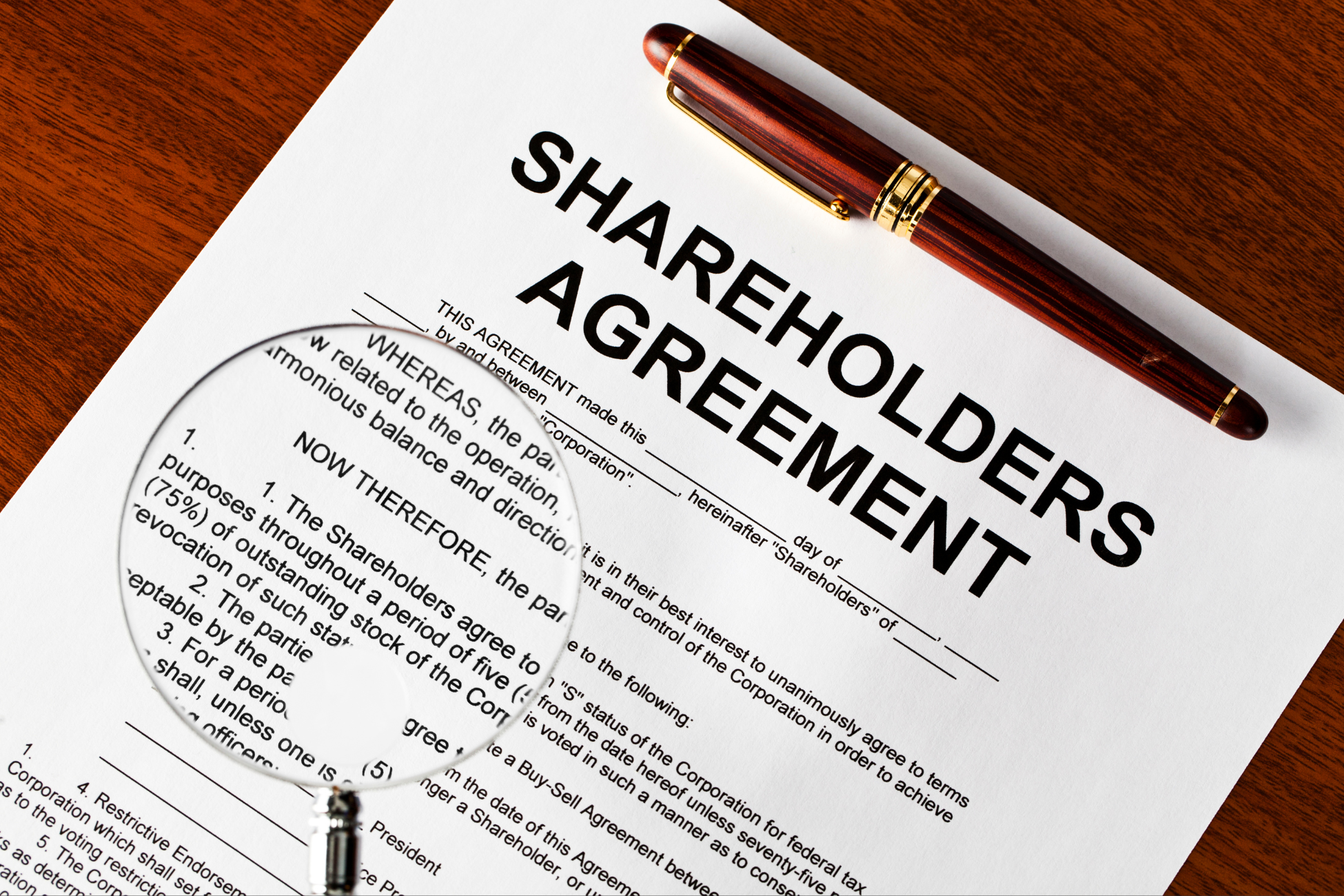
Liquidation preferences are a standard feature of many shareholder agreements, particularly where outside investors are involved. They can significantly affect how money is distributed on a sale or winding up. Despite this, they are often misunderstood.
The central issue is simple. A liquidation preference may determine how shareholders rank among themselves. It does not mean those shareholders will be paid before the company’s creditors if the company is insolvent.
Shares and Shareholder Agreements
A share represents ownership in a company. Shareholders typically have rights such as:
- voting on key decisions;
- receiving dividends if profits are distributed;
- sharing in surplus assets if the company is wound up; and
- selling or transferring their shares.
Not all shares are the same. Companies can issue different classes with different rights:
- Ordinary shares: Usually held by founders and key persons. These carry voting rights and participate in any remaining value.
- Preference shares: Often held by investors. These may include special rights such as priority repayment, fixed returns, or conversion into ordinary shares.
- Non-voting class shares: These can receive financial benefits but have limited or no voting rights, and are usually held by employees
The details of each class are usually set out in the shareholder agreement.
What Is a Shareholder Agreement?
A shareholder agreement is a private contract between the company and its shareholders. It governs how the company operates and how shareholders interact.
It often covers:
- appointment and removal of directors;
- restrictions on selling shares;
- dispute resolution processes; and
- what happens on a sale, exit, or winding up.
Importantly, this agreement binds the shareholders. It does not bind external parties such as lenders or suppliers.
What Is a Liquidation Preference?
A liquidation preference gives certain shareholders priority over others when funds are distributed following a sale, exit, or winding up. For example, an investor may be entitled to recover their investment, or a multiple of it, before ordinary shareholders receive anything.
These rights are effective as between shareholders. Their operation becomes more limited when the company is insolvent.
The Common Misunderstanding
Shareholder agreements often state that preference shareholders are paid first in a “liquidation, winding up or insolvency”. That language is frequently taken at face value.
The assumption is that, if the company fails, those shareholders move to the front of the queue and are paid before anyone else.
As a general rule, that is not correct.
The agreement can reorder priorities among shareholders. It cannot override the legal framework that applies to creditors when a company is insolvent.
Creditors Rank Ahead of Shareholders
In insolvency, the starting point is that creditors are paid before shareholders receive any distribution.
Creditors are parties the company owes money to, such as banks, employees, landlords and suppliers. They have provided value to the company on the expectation of repayment. Shareholders, by contrast, are owners who assume the risk of the business.
When a company cannot pay its debts, insolvency law governs what happens to its assets. Those assets are realised and applied to creditor claims first. Shareholders only participate if there is a surplus after all creditor claims have been met. In many cases, there is no surplus.
Where Liquidation Preferences Fit
Liquidation preferences continue to have a role, but that role is limited in an insolvency context.
They typically operate only after creditor claims have been satisfied. At that point, if any funds remain, the preference determines how those funds are divided between different classes of shareholders.
In that sense, liquidation preferences are primarily about relative priority within the shareholder group. They do not change the external priority between shareholders and creditors.
Key Points & Practical Takeaway
As a general rule:
- creditors rank ahead of shareholders in an insolvency, regardless of what the shareholder agreement says; and
- liquidation preferences operate only after creditor claims are satisfied, if there is anything left to distribute.
Liquidation preferences are an important negotiating tool and can significantly affect returns between shareholders. However, they do not override insolvency law or the rights of secured creditors.
They should be understood for what they are: a mechanism for allocating value among shareholders, not a guarantee of priority over creditors in a distressed scenario.